TR-069 Per-Device Unique Credentials — Software Design Document
- 1. Overview
- 2. Architecture
- 3. Data Model
- 4. Configuration
- 5. Business Logic
- 5.1. Credential Provisioning Flow
- 5.2. Profile Task Credential Parameter Exclusion
- 5.3. Credential Confirmation Flow
- 5.4. Authentication Flow (Management Server)
- 5.5. Connection Request Push Flow
- 5.6. Credential Cleanup Flow
- 5.7. Bootstrap Behavior
- 5.8. Device Re-registration After Deletion
- 5.9. Interaction with cpe_provision and Profile CR Credentials
- 5.9.1. Priority Rules Summary
- 5.9.2. Scenario A: cpe_provision was configured before unique credentials were enabled
- 5.9.3. Scenario B: cpe_provision CR credentials are added after unique credentials are already confirmed
- 5.9.4. Scenario C: Profile is applied while unique credentials are managed for the device
- 5.10. Disabling the Feature After Activation
- 6. Support Guide
- 7. Database Migration Reference
1. Overview
1.1. Purpose
This document describes the design and implementation of the per-device unique credentials feature (DEV-1194) for TR-069 devices managed by the Friendly Technologies ACS.
Link to FRD: https://friendlytech.sharepoint.com/:w:/g/IQCl5xweZOPGTpwQoYOv_uYUAWtrHYYIK1nP9NtOKkSfNAU?e=hx5CJn
| This feature applies exclusively to TR-069 (CWMP) devices. Other device management protocols (MQTT, USP, LWM2M) are not affected. |
1.2. Problem Statement
In TR-069, the ACS communicates with CPE devices using two sets of credentials:
-
Management Server (MS) credentials — username/password used by the TR-069 device to authenticate its HTTP Inform requests to the ACS. Configured in the
cpe_logintable and shared across all devices in the same login group. -
Connection Request (CR) credentials — username/password used by the ACS to authenticate a Connection Request push to the TR-069 device. Configured in the device profile and shared across all devices in the same profile.
Because these credentials are shared within a group or profile, any device that obtains them can impersonate another device during HTTP authentication, and any party with knowledge of the CR credentials can initiate unauthorized connection requests to any device in the same group or profile.
For TR-069 deployments that require stronger device identity isolation, the shared credential model is insufficient.
1.3. Solution Summary
The system can now generate a unique username/password pair for each individual TR-069 device for:
-
Management Server authentication — used by the TR-069 device when it sends Inform requests to the ACS over HTTP
-
Connection Request authentication — used by the ACS when it initiates a TR-069 Connection Request push to the device
The feature is opt-in, configured per cpe_login group.
Credentials are generated on first TR-069 contact, sent to the device via SetParameterValues, and considered active only after the device confirms receipt via SetParameterValuesResponse.
Until confirmation, the shared credentials from cpe_login (MS) and profile (CR) remain valid as fallback.
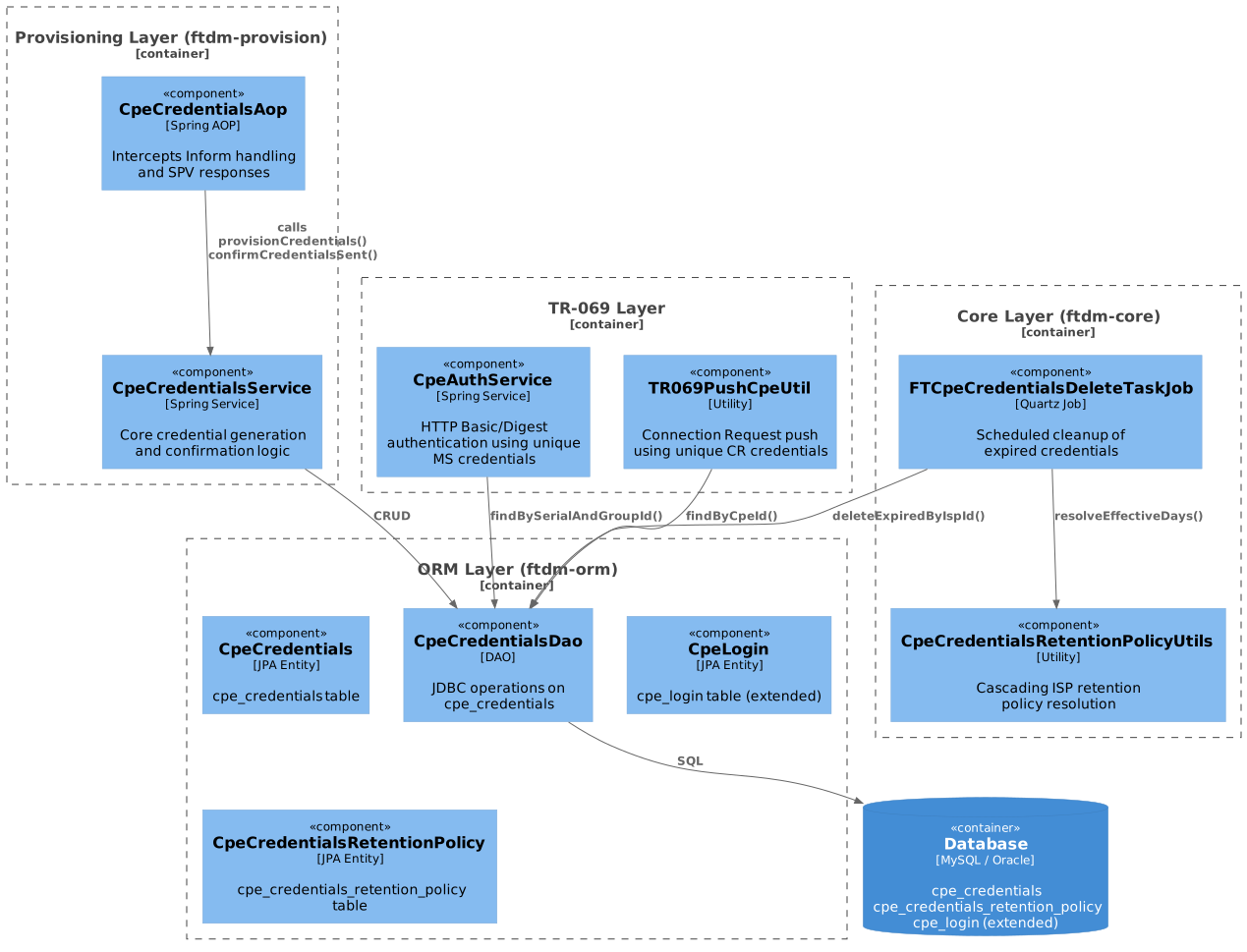
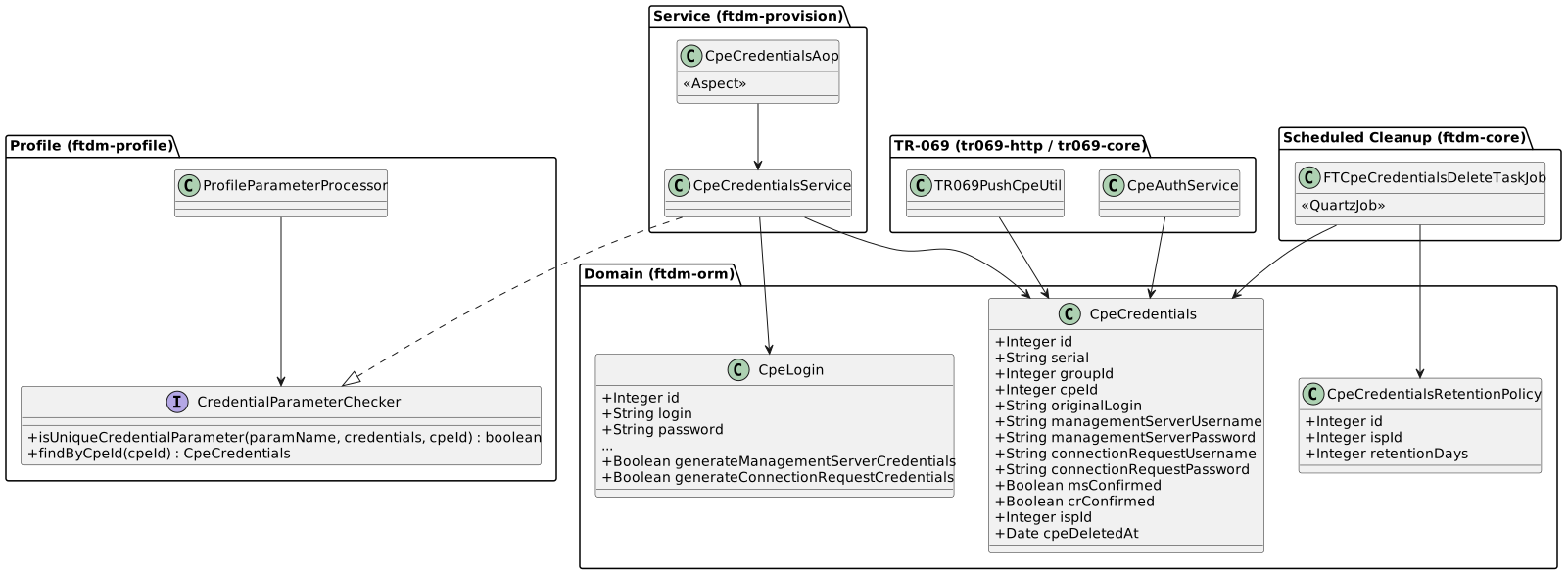
3. Data Model
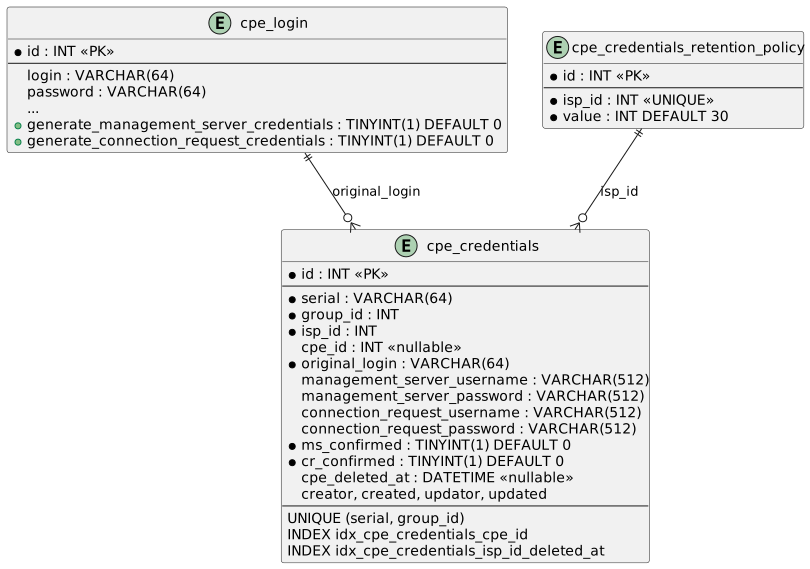
3.2. Table Descriptions
3.2.1. cpe_login (modified)
Two boolean columns were added:
| Column | Default | Description |
|---|---|---|
|
|
When |
|
|
When |
3.2.2. cpe_credentials
One record per device (identified by serial + group_id).
Created on first device Inform after the feature is enabled.
| Column | Nullable | Description |
|---|---|---|
|
No |
Primary key. |
|
No |
Device serial number. |
|
No |
Login group ID from |
|
Yes |
Foreign key to |
|
No |
ISP identifier. Used by the retention policy cleanup job. |
|
No |
The |
|
Yes |
Unique encrypted MS credentials. Both either set or |
|
Yes |
Unique encrypted CR credentials. Both either set or |
|
No |
Becomes |
|
No |
Becomes |
|
Yes |
Populated when the associated CPE device is deleted. Used by the retention policy cleanup job to determine when the credential record itself can be removed. Becomes |
3.2.3. cpe_credentials_retention_policy
Defines how long credential records are kept after the associated device is deleted.
| Column | Default | Description |
|---|---|---|
|
— |
ISP identifier. |
|
|
Retention period in days. After this period, credential records for deleted devices are purged by the cleanup job. |
Default row (isp_id=0, value=30) is inserted during migration and serves as a global fallback.
4. Configuration
4.1. Feature Toggle per Login Group (cpe_login)
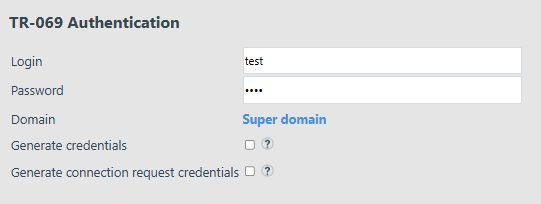
The feature is enabled/disabled at the cpe_login level via two independent flags:
| Flag | Effect when enabled (true) |
|---|---|
|
ACS generates unique MS username/password for each device in this login group and sends them via SPV.
Authentication switches to unique credentials once |
|
ACS generates unique CR username/password for each device in this login group and sends them via SPV.
Connection Request push switches to unique credentials once |
Both flags are independent: you can enable/disable MS-only, CR-only, or both.
Settings on UI: Settings → Protocols → TR-069 → selected Login.
An example:
When generate_management_server_credentials is enabled for a login group, the ACS configuration parameter useCpeSerialAsLogin is ignored for devices in that group.
useCpeSerialAsLogin requires each device to present its serial number as the HTTP authentication username, but unique MS credentials use a generated username in the format {OUI}-{RANDOM}-{SERIAL} — not the serial alone.
Since the two mechanisms are mutually exclusive, useCpeSerialAsLogin takes no effect while generate_management_server_credentials is active.
|
4.2. Credential Length Parameters (DMConfigurationParameter)
The length of the randomly generated part of the credential value is configurable (Settings → System Settings → ACS Settings page):
| Parameter | Default | Allowed Range | Description |
|---|---|---|---|
|
|
|
Minimum length of the random part. If the configured value is out of range, the default (7) is used. |
|
|
|
Maximum length of the random part. If the configured value is out of range, the default (180) is used. |
The actual random part length is chosen uniformly at random in the range [credentialMinLength, credentialMaxLength] on each credential generation.
| If these parameters have invalid values, default ones will be used. |
4.3. Credential Format
The full credential value follows this pattern:
{OUI}-{RANDOM_PART}-{SERIAL}
Where:
-
{OUI}— device OUI identifier -
{RANDOM_PART}— random string of length betweencredentialMinLengthandcredentialMaxLength, drawn from:ABCDEFGHIJKLMNOPQRSTUVWXYZabcdefghijklmnopqrstuvwxyz0123456789!@#%^*()-_=+[]{}|;.?/~The $character is intentionally excluded from the charset due to a known limitation in the TR-069 device emulator. -
{SERIAL}— device serial number
Credentials are DES-encrypted before being stored in the database.
4.4. Retention Policy
The cleanup job (FTCpeCredentialsDeleteTaskJob) runs on a Quartz schedule and deletes credential records for already-deleted CPE devices.
Domain-specific setting set on Settings → System Settings → Interface page:

The resolution order for the retention period is:
-
ISP-specific entry in
cpe_credentials_retention_policytable for the device’sisp_id -
Parent ISP entry (traversing the ISP hierarchy using dot-notation)
-
Global default entry (
isp_id = 0, value = 30 days)
5. Business Logic
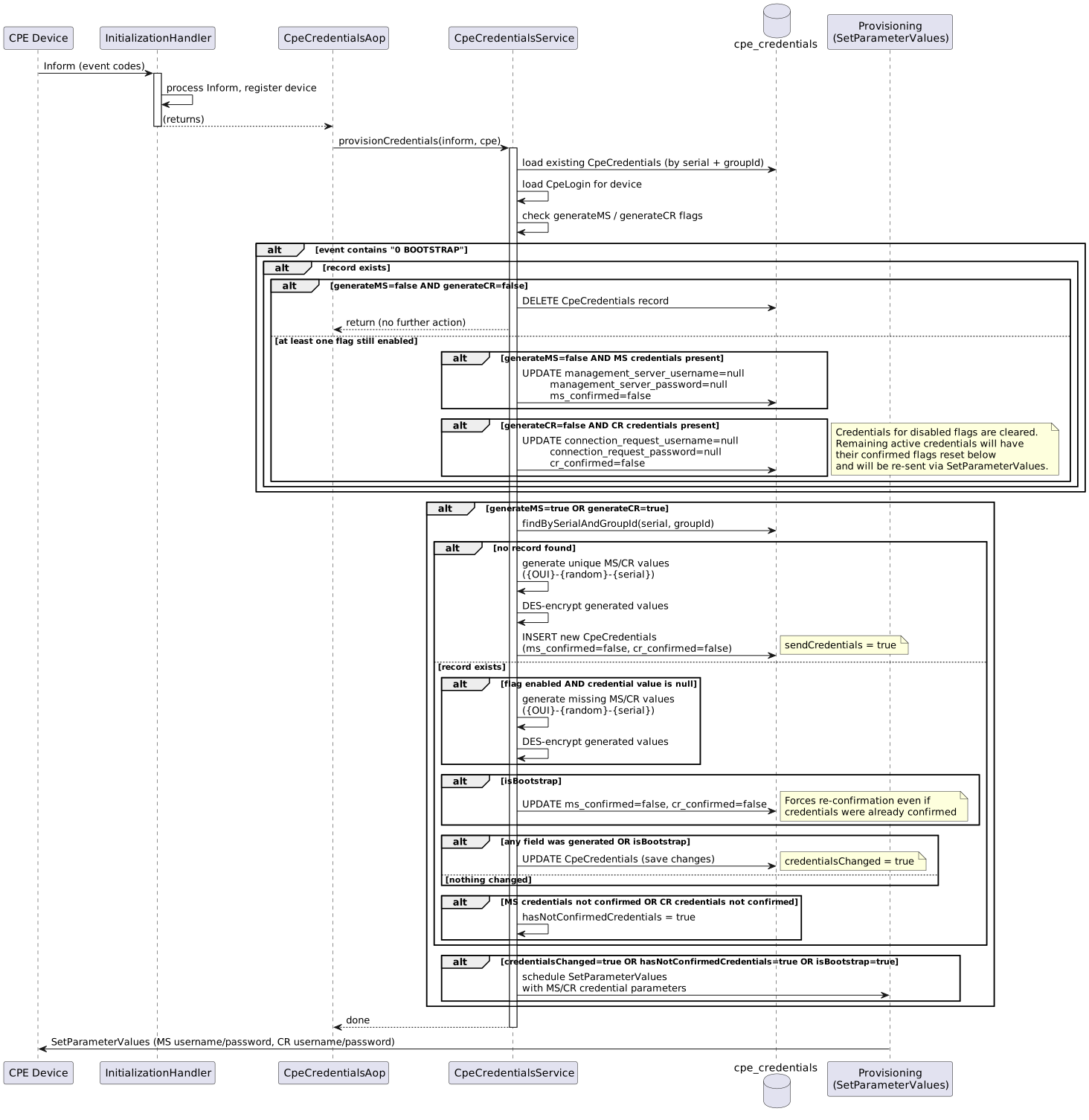
5.1. Credential Provisioning Flow
Triggered on every device Inform via CpeCredentialsAop → CpeCredentialsService.provisionCredentials().
5.2. Profile Task Credential Parameter Exclusion
When a profile SetParameterValues task is being built for a device, ProfileParameterProcessor.processTaskCreating() filters credential parameters (MS username/password, CR username/password) out of the profile parameter list under two conditions:
-
Device already has unique credentials — a
cpe_credentialsrecord exists with a non-nullmanagementServerUsername(for MS params) orconnectionRequestUsername(for CR params). The profile parameter for that credential type is excluded, preventing the profile from overwriting the unique value already stored for the device. -
Device does not yet have unique credentials, but its
CpeLoginis configured to generate them — thecpe_login.generate_management_server_credentialsorgenerate_connection_request_credentialsflag is enabled. The corresponding credential parameters are excluded even though nocpe_credentialsrecord exists yet, because unique credentials will be generated and sent to the device on first contact.
handleSetParameterValuesProfileResponse() (see Profile SPV Response (handleSetParameterValuesProfileResponse())) continues to run after every profile SetParameterValuesResponse as a safety net: if credential parameters reach the device despite the exclusion due to some issue, the unique credentials are immediately re-sent upon device confirmation.
5.3. Credential Confirmation Flow
CpeCredentialsAop.afterSPVResponse() intercepts every SetParameterValuesResponse and routes it based on task type:
-
Provision SPV (
SetParameterValuesProvision) →confirmCredentialsSent()— confirms or clears unique credentials depending on current flag state. -
Profile SPV (
SetParameterValuesProfile) →handleSetParameterValuesProfileResponse()— re-sends unique credentials if the profile overwrote them. -
All other SPV task types are ignored by
CpeCredentialsAop.
5.3.1. Provision SPV Response (confirmCredentialsSent())
Triggered when a device acknowledges a provision SetParameterValues that carried unique MS/CR credentials.
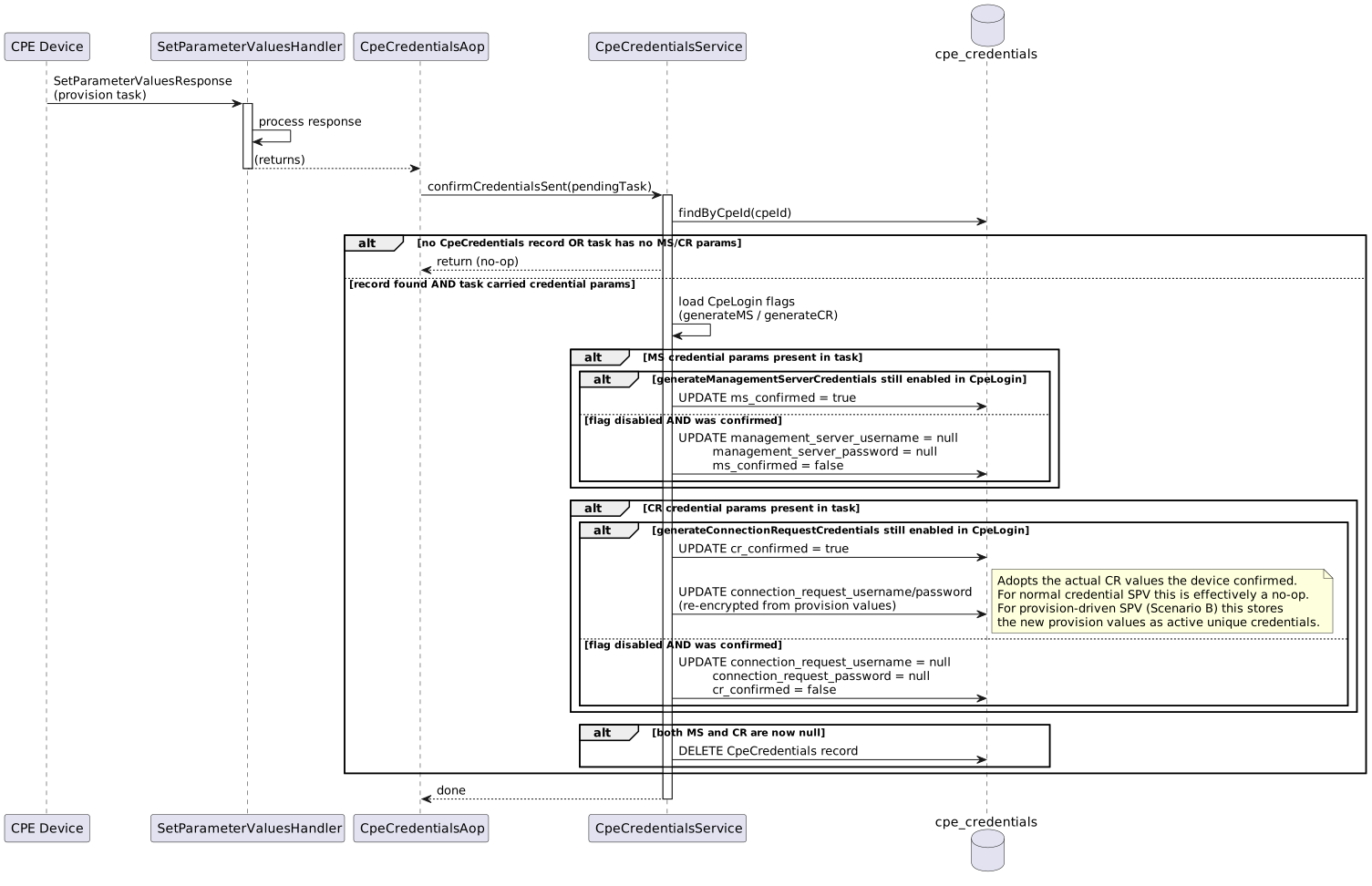
Confirmation is performed on SetParameterValuesResponse, not on the first authentication with new credentials.
This eliminates the timing window that would exist if confirmation happened on authentication, which could occur during a push initiated with old credentials.
|
5.3.2. Profile SPV Response (handleSetParameterValuesProfileResponse())
Triggered when a device acknowledges a profile SetParameterValues.
Under normal conditions, credential parameters are excluded from profile tasks before they are sent (see Profile Task Credential Parameter Exclusion), so this method will typically find no credential parameters in the task and return early.
It acts as a safety net: if credential parameters do reach the device despite the exclusion, ACS detects this on SetParameterValuesResponse and immediately re-sends the unique credentials to restore them, resetting the confirmed flags until the device re-confirms.
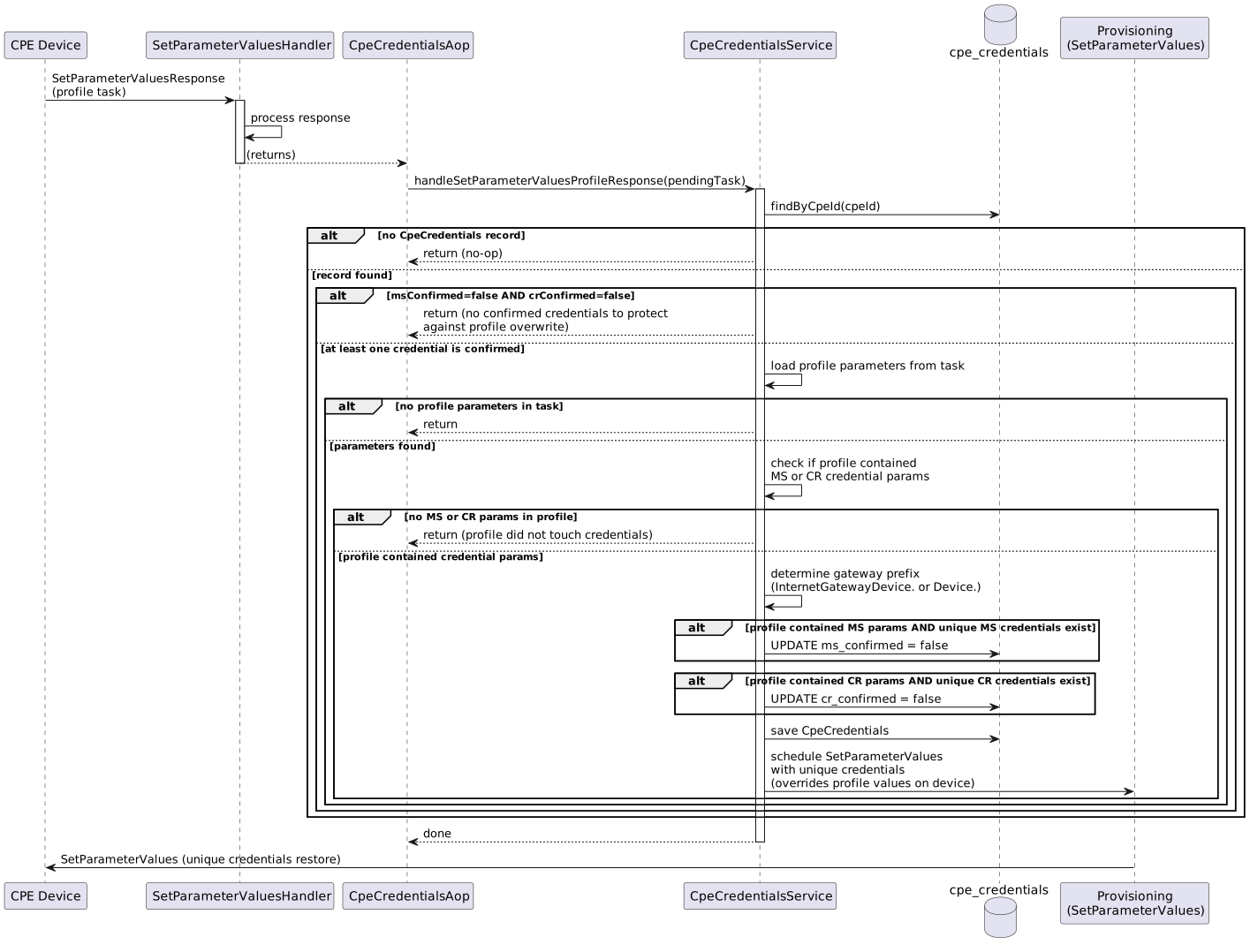
Profile and provision are treated differently by design.
Profile changes are automatically "healed" — ACS detects that the profile overwrote unique credentials and immediately re-sends them.
Provision changes are intentional and adopted as the new unique values (handled in confirmCredentialsSent(), see Scenario B in Interaction with cpe_provision and Profile CR Credentials).
|
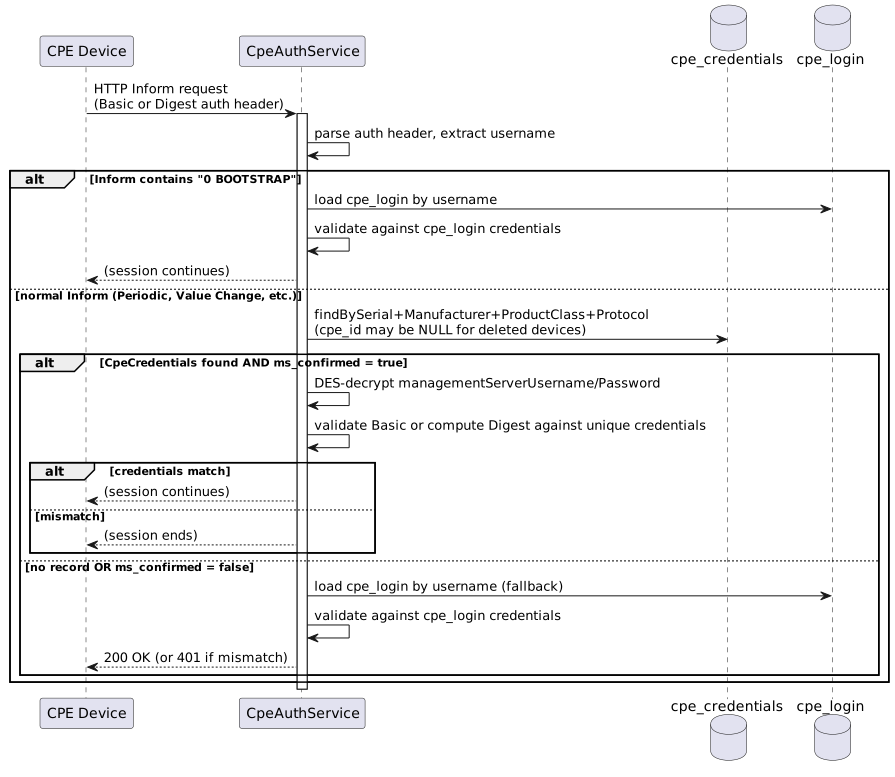
5.4. Authentication Flow (Management Server)
When a device sends 0 BOOTSTRAP (factory reset), ACS always falls back to shared cpe_login credentials regardless of whether unique MS credentials exist and are confirmed.
This ensures the device can authenticate immediately after a reset, before the ACS has a chance to re-send and the device re-confirm the unique credentials.
For all other events in Inform, ACS looks up cpe_credentials by device identity (serial, manufacturer, product class, protocol).
This lookup works regardless of whether the device currently exists in ACS — a deleted device with cpe_id = NULL is found by the same query.
If ms_confirmed = true, ACS validates the request against the unique MS credentials stored in that record.
If no such record exists, or if the credentials have not yet been confirmed, authentication falls back to the shared cpe_login credentials.
5.5. Connection Request Push Flow
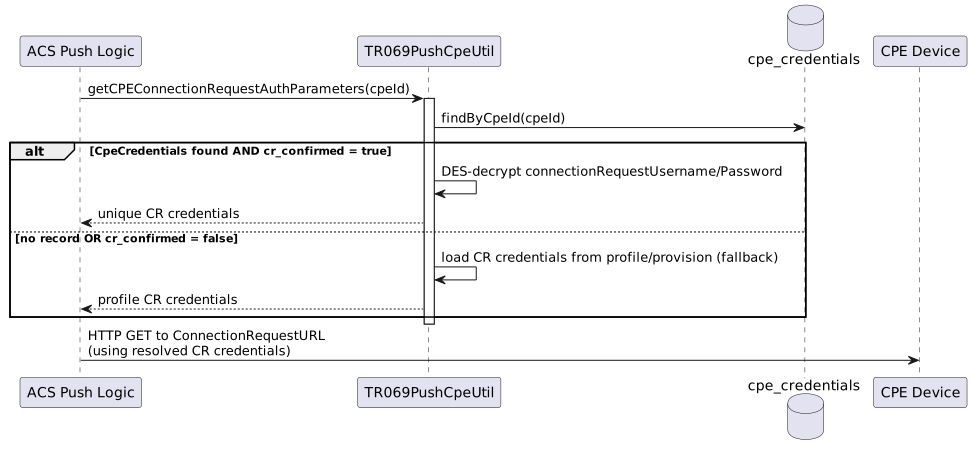
When initiating a Connection Request push to a device, ACS resolves the CR credentials to use as follows:
-
If a
cpe_credentialsrecord exists for the device andcr_confirmed = true, ACS uses the unique CR credentials stored in that record. -
Otherwise — if no record exists, or the credentials have not yet been confirmed — ACS falls back to the default CR credentials from the device profile or provision.
5.6. Credential Cleanup Flow
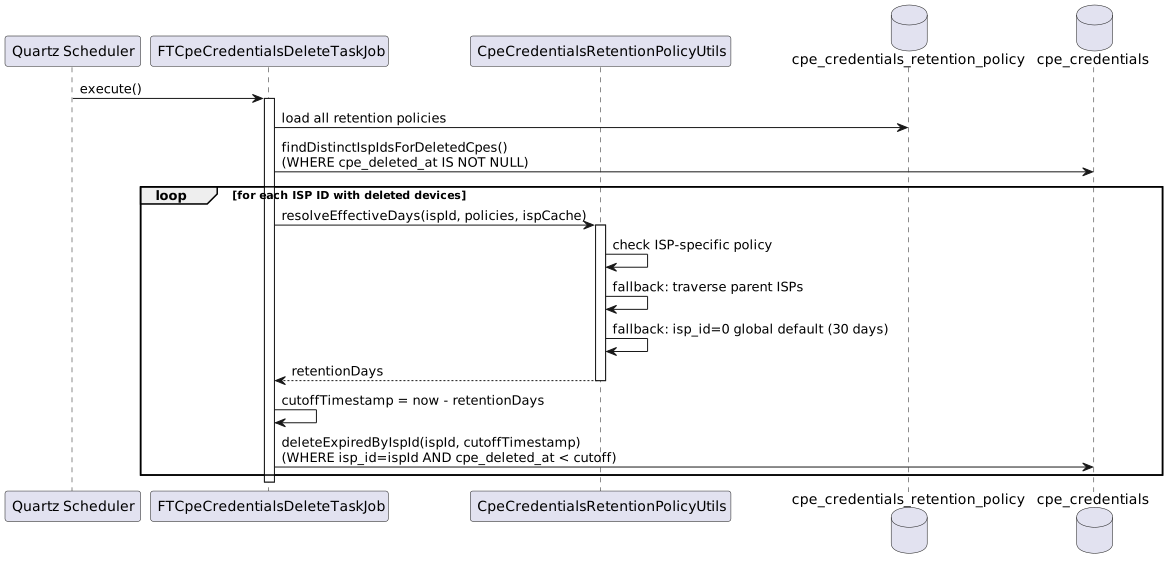
When a device is deleted from ACS, its cpe_credentials record is not removed immediately — instead, cpe_deleted_at is set to the deletion timestamp and the record is retained for a configurable period.
This allows the device to re-register without losing its credentials if it comes back online within the retention window.
A scheduled Quartz job (FTCpeCredentialsDeleteTaskJob) periodically removes records for deleted devices that have exceeded the retention period.
The job runs on the schedule defined by the autoDeleteCron ACS configuration parameter (default: 0 0 2 * * ? — every day at 02:00).
The retention period is resolved per ISP: the job first checks for an ISP-specific entry in cpe_credentials_retention_policy, then traverses the ISP hierarchy, and finally falls back to the global default of 30 days.
If the resolved retention period is 0, cleanup is disabled for that ISP and its credential records are never automatically removed.
5.7. Bootstrap Behavior
When a device sends 0 BOOTSTRAP (factory reset), the confirmed flags are reset to false:
-
ms_confirmed→false -
cr_confirmed→false
The credential values themselves are not regenerated — the same unique credentials are sent to the device again via SetParameterValues.
This means the device will reauthenticate with cpe_login credentials until the ACS resends and the device re-confirms the unique credentials.
If a device with an existing cpe_credentials record send Inform with 0 BOOTSTRAP through an ACS endpoint that does not require HTTP authentication, the record is permanently deleted.
|
5.8. Device Re-registration After Deletion
When a device is deleted from ACS, cpe_id is set to NULL and cpe_deleted_at is populated, but ms_confirmed and cr_confirmed are intentionally preserved.
This allows the device to re-register and authenticate using its unique credentials without going through a factory reset.
If the deleted device re-registers without 0 BOOTSTRAP (e.g., Periodic Inform):
-
ACS looks up
cpe_credentialsby device identity (serial, manufacturer, product class, protocol). The record is found even thoughcpe_id = NULL. -
If
ms_confirmed = true, ACS authenticates the request using the stored unique MS credentials. If the device sendscpe_logincredentials in this case, its authenitcation will fail. -
cpe_idis updated fromNULLto the new device ID;cpe_deleted_atis cleared. -
Credentials are not re-sent — the device already holds them and has previously confirmed receipt.
If the deleted device re-registers with 0 BOOTSTRAP (factory reset), normal Bootstrap handling applies:
ms_confirmed and cr_confirmed are reset to false, and the unique credentials are re-sent via SetParameterValues.
See Bootstrap Behavior for details.
5.9. Interaction with cpe_provision and Profile CR Credentials
The behavior of unique CR credentials when other CR credential sources exist depends on the order of operations.
5.9.1. Priority Rules Summary
| CR Credential Source | Condition | Result |
|---|---|---|
Unique (cpe_credentials) |
|
Used for push. Profile values will be overwritten. |
cpe_provision |
Added before unique credentials were enabled |
Unique credentials are generated later and sent to the device. Once confirmed, they take precedence. |
cpe_provision |
Added after unique credentials are already confirmed |
Provision values are sent to the device and, upon confirmation, stored in |
Profile |
Profile is applied and unique credentials are managed for the device — either a |
Credential parameters are excluded from the profile task before it is created. The device never receives them as part of the profile. |
5.9.2. Scenario A: cpe_provision was configured before unique credentials were enabled
-
Device has CR credentials in
cpe_provision. -
Administrator enables
generate_connection_request_credentials = trueon the login group. -
On the next device Inform,
CpeCredentialsService.provisionCredentials()generates new unique CR credentials and schedules aSetParameterValuestask. -
The device receives and confirms the unique credentials via
SetParameterValuesResponse. -
Result:
cpe_credentials.connectionRequestUsername/Passwordholds the unique values;cr_confirmed = true. The cpe_provision CR values are no longer used for Connection Request push.
5.9.3. Scenario B: cpe_provision CR credentials are added after unique credentials are already confirmed
-
Device already has confirmed unique CR credentials (
cr_confirmed = true). -
A new
cpe_provisionentry is added (or updated) with CR username/password values for this device. -
ACS sends a
SetParameterValueswith the provision CR parameters to the device. -
Device acknowledges the SPV with
SetParameterValuesResponse. -
CpeCredentialsService.confirmCredentialsSent()detects CR parameters in the task and reads their values fromcpe_provision. -
The provision values are decrypted and re-encrypted into
cpe_credentials.connectionRequestUsername/Password. -
Result: the provision CR values are now stored in
cpe_credentialsand become the active unique credentials;cr_confirmed = true.
In Scenario B the provision values "win" because they arrive after the unique credentials and the device confirms them. The cpe_credentials record is updated to reflect the current state of the device — whatever CR credentials the device last confirmed are always stored in cpe_credentials.
|
5.9.4. Scenario C: Profile is applied while unique credentials are managed for the device
ProfileParameterProcessor excludes credential parameters from the profile task in two situations.
Sub-scenario C1: Unique credentials already exist
-
Device already has a
cpe_credentialsrecord (MS and/or CR credentials generated). -
ACS is about to send a profile
SetParameterValuesthat includes credential parameters. -
ProfileParameterProcessor.processTaskCreating()loads thecpe_credentialsrecord;isUniqueCredentialParameter()detects that the corresponding username is non-null and excludes the parameter from the task. -
Device confirms the profile SPV.
CpeCredentialsService.handleSetParameterValuesProfileResponse()is triggered but finds no credential parameters in the task and returns early. -
Result: the profile is applied on the device without touching the unique credentials.
cr_confirmedremainstrue.
Sub-scenario C2: Unique credentials not yet created, but CpeLogin has generation enabled
-
Device’s
cpe_loginhasgenerate_management_server_credentials=trueand/orgenerate_connection_request_credentials=true, but the device has not yet connected — nocpe_credentialsrecord exists. -
ACS builds a profile
SetParameterValuestask for the device. -
ProfileParameterProcessor.processTaskCreating()finds nocpe_credentialsrecord, but resolves theCpeLoginvia the active device session store;isUniqueCredentialParameter()detects the generation flags are enabled and excludes the corresponding parameters. -
When the device eventually connects,
provisionCredentials()generates and sends the unique credentials. -
Result: the profile does not pre-configure credential parameters that will be auto-generated..
If credential parameters reach the device despite the exclusion due to some issue, handleSetParameterValuesProfileResponse() detects them on SetParameterValuesResponse, resets the confirmed flag(s), and immediately re-sends the unique credentials to restore them.
|
| Profile and cpe_provision are treated differently. Profile credential parameters are proactively excluded when unique credentials are managed; cpe_provision changes are intentional and adopted as the new unique values. |
5.10. Disabling the Feature After Activation
5.10.1. Both flags false from the start
If both generate_management_server_credentials and generate_connection_request_credentials are false on a cpe_login, the feature is entirely inactive for that login group:
-
CpeCredentialsService.provisionCredentials()is called on every Inform, but thegenerateMS=true OR generateCR=truecondition is not met — no credentials are generated, nocpe_credentialsrecord is created, and noSetParameterValuestask is scheduled. -
All devices in the group authenticate with shared
cpe_logincredentials and receive Connection Request pushes using profile CR credentials, exactly as before the feature existed.
5.10.2. Flag disabled after credentials were generated but before confirmation
If a flag is disabled after a cpe_credentials record has been created (credentials generated and a SetParameterValues task scheduled) but before the device responds with SetParameterValuesResponse:
-
The
cpe_credentialsrecord remains in the database withms_confirmed=false(and/orcr_confirmed=false). -
On the next Inform,
provisionCredentials()sees the flag is nowfalseand does not schedule a new SPV — the pending credentials are left as-is. -
When the device eventually responds with
SetParameterValuesResponse,confirmCredentialsSent()reads the current flag value, detects it isfalse, and clears the corresponding credential columns (NULL) and resets the confirmed flag. -
If both MS and CR become
NULLas a result, the entirecpe_credentialsrecord is deleted. -
Until that cleanup happens, the record sits in the database with
ms_confirmed=false; this has no functional impact because ACS only switches to unique credentials once the confirmed flag istrue.
5.10.3. Flag disabled after credentials were confirmed
If an administrator disables the generate_management_server_credentials or generate_connection_request_credentials flag on a cpe_login after credentials have already been provisioned and confirmed:
-
On the next
SetParameterValuesResponsefor that device,CpeCredentialsService.confirmCredentialsSent()detects the flag is now disabled. -
The corresponding credential columns are cleared (
NULL) and the confirmed flag is reset. -
If both MS and CR credentials are now
NULL, the entirecpe_credentialsrecord is deleted. -
The device falls back to shared
cpe_logincredentials.
There is a window between disabling the flag and the next SetParameterValuesResponse during which the cpe_credentials record still exists with ms_confirmed / cr_confirmed = true.
During this window, ACS continues to use the unique credentials — MS authentication validates against them and Connection Request pushes use them — exactly as if the flag were still enabled.
The credentials are cleared only after the next SetParameterValuesResponse triggers confirmCredentialsSent() and detects the flag is now disabled.
|
When the device sends a 0 BOOTSTRAP the corresponding credentials are cleared (see the bootstrap handling in Credential Provisioning Flow for details).
6. Support Guide
6.1. How to Enable Unique Credentials for a Device Group
-
In the ACS management UI, navigate to the login group configuration (
cpe_login). -
Enable Generate Management Server Credentials and/or Generate Connection Request Credentials.
-
On the next Inform from a device in this group, unique credentials will be generated and sent to the device.
| The transition is seamless — devices continue to authenticate with shared credentials until they confirm the new unique ones. |
6.2. Understanding the Confirmation Window
Between the moment unique credentials are sent and the device confirms them:
-
The device is still using the old shared credentials from
cpe_login. -
ACS accepts both: if
ms_confirmed = false, it falls back tocpe_logincredentials automatically. -
Once the device ACKs
SetParameterValues(SPV response),ms_confirmedis set totrueand only the unique credentials are accepted.
6.3. What Happens on Factory Reset
When a device is factory-reset:
-
Device sends Inform with event code
0 BOOTSTRAP. -
ACS resets
ms_confirmed = falseandcr_confirmed = falsefor that device. -
ACS sends the same unique credentials again via
SetParameterValues. -
Device authenticates with shared
cpe_logincredentials until it re-confirms the unique ones.
The device goes through the same confirmation cycle as on first enrollment.
If the device sends 0 BOOTSTRAP through an ACS endpoint that does not require HTTP authentication, its unique credentials are permanently deleted.
|
If a deleted device reconnects with a regular Periodic Inform (no factory reset), it is authenticated using its still-confirmed unique credentials, cpe_id is restored, and the credentials are not re-sent.
See Device Re-registration After Deletion for the full re-registration flow.
|
6.4. Credential Storage Security
Credential values in cpe_credentials are DES-encrypted.
They are never stored in plain text in the database.
Decryption happens in memory only during authentication or push operations.
6.5. Retention Policy After Device Deletion
6.5.1. Main logic
When a device is deleted from ACS:
-
Its
cpe_credentialsrecord is not immediately removed. -
The
cpe_deleted_atcolumn is set to the deletion timestamp. -
A scheduled Quartz job runs periodically and removes credential records older than the configured retention period.
-
The default retention is 30 days (configurable per ISP in
cpe_credentials_retention_policy).
This retention window ensures that if a deleted device unexpectedly comes back online, its credentials are still available for a reasonable period.
6.5.2. ISP Synchronization on Deletion
Before the credential record is soft-deleted, cpe_credentials.isp_id is updated to match the location_id of the device at the moment of deletion.
This step is necessary when ispMode=1 (Multi-Domain mode) and the operator has manually moved the device to a different domain after the credential record was first created.
In that case cpe_credentials.isp_id may still hold the old domain value, so the update ensures the retention policy is resolved against the domain the device actually belonged to when it was deleted — not the domain it was originally enrolled in.
Without this synchronization, the scheduled job would apply the wrong domain’s retention period (or fall back to the default), potentially deleting credentials too early or too late relative to the operator’s intent.
7. Database Migration Reference
Migration file: changelog-6.5.1.DEV-1194.xml
| Change Set | Description |
|---|---|
|
Adds |
|
Creates the |
|
Oracle only: creates sequence |
|
Creates |
|
Oracle only: creates sequence |
|
Adds performance indexes: |