ADR-003: Environment Manager Web UI
Context
The existing feature branch environment workflow relies on shell scripts (create-feature-env.sh, destroy-feature-env.sh). While functional, this approach has several limitations:
-
Requires CLI access - Developers need kubectl and git configured locally
-
No visibility - Cannot easily view all environments or their status
-
Manual image selection - No interface to browse available Harbor tags
-
No build integration - Branch-based images require separate workflow triggers
-
Limited validation - Script-based creation prone to naming conflicts
-
No ArgoCD visibility - Must use separate ArgoCD UI to check sync status
Decision
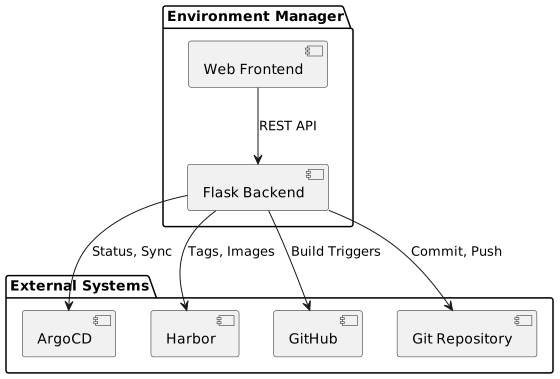
Implement a web-based Environment Manager with the following components:
Backend (Flask API)
-
RESTful API for environment CRUD operations
-
Integration with ArgoCD API for status and sync
-
Integration with Harbor API for image tag discovery
-
Integration with GitHub Actions for build triggers
-
Git operations for committing values and application files
-
Modular architecture with blueprints and services
Consequences
Positive
-
Self-service - Developers can create environments without DevOps assistance
-
Visibility - Single dashboard for all environments
-
Discoverability - Browse available image tags and branches
-
Validation - Real-time duplicate detection and input validation
-
Automation - Integrated build triggers for branch-based images
-
Speed - ArgoCD sync optimization reduces deployment time from 3-5 min to 10-15 sec
-
Flexibility - Partial or full environment selection
-
Auditability - All changes go through Git commits
Implementation Details
API Endpoints
| Endpoint | Purpose |
|---|---|
GET /api/environments |
List all environments with status |
POST /api/environments |
Create new environment |
DELETE /api/environments/{name} |
Delete environment |
GET /api/services |
Get service configuration |
GET /api/tags/{service} |
Get Harbor tags |
POST /api/builds/{service} |
Trigger build |
Environment Types
-
Partial - Selected services, uses parent database
-
Full - All services, dedicated database
Key Features
-
Duplicate Name Protection - Three-layer validation (frontend cache, submit check, backend check)
-
ArgoCD Sync Optimization - Immediate sync trigger after git commit
-
Harbor Image Verification - Wait for images before creating environment
-
ArgoCD Image Updater Integration - Manage automatic image updates
File Structure
backend/
├── app.py              # Flask entry point
├── config.py           # Configuration constants
├── utils/helpers.py    # Utility functions
├── services/           # External service integrations
└── routes/             # API endpoint blueprints

frontend/
├── index.html          # Main page
├── css/styles.css      # Styles
└── js/                 # JavaScript modules
Alternatives Considered
-
ArgoCD ApplicationSet - Rejected: Less flexibility for partial environments
-
Backstage plugin - Rejected: Too heavyweight, requires Backstage adoption
-
Jenkins pipeline - Rejected: Less interactive, no real-time validation
-
GitOps UI (Weaveworks) - Rejected: Limited Harbor/GitHub integration
-
Enhanced shell scripts - Rejected: Cannot provide web-based visibility
Security Considerations
-
Harbor and GitHub tokens stored as environment variables
-
ArgoCD API accessed with service account token
-
Git commits attributed to service account
-
No direct kubectl access needed by users
-
Rate limiting on API endpoints